
Early childhood education and childcare workers rallied with allies to mark the national Day Without Child Care on May 11 at the State House in Trenton. The nationwide childcare affordability crisis is especially magnified in New Jersey, where too many parents cannot afford childcare but earn too much money to qualify for subsidies.
CWA Local 1037 proudly represent over 1,000 in-home childcare providers who are fighting for a fair union contract. For many providers, the ability to provide childcare is limited by inadequate childcare subsidies provided by the state and enrollment restrictions. Prior to the rally at the State House, CWA Local 1037 members, and our community organizing partner New Jersey Communities United (NJCU) were joined by allies and supporters as we rallied outside of the Department of Human Services office calling on the state to negotiate a fair contract with union providers.
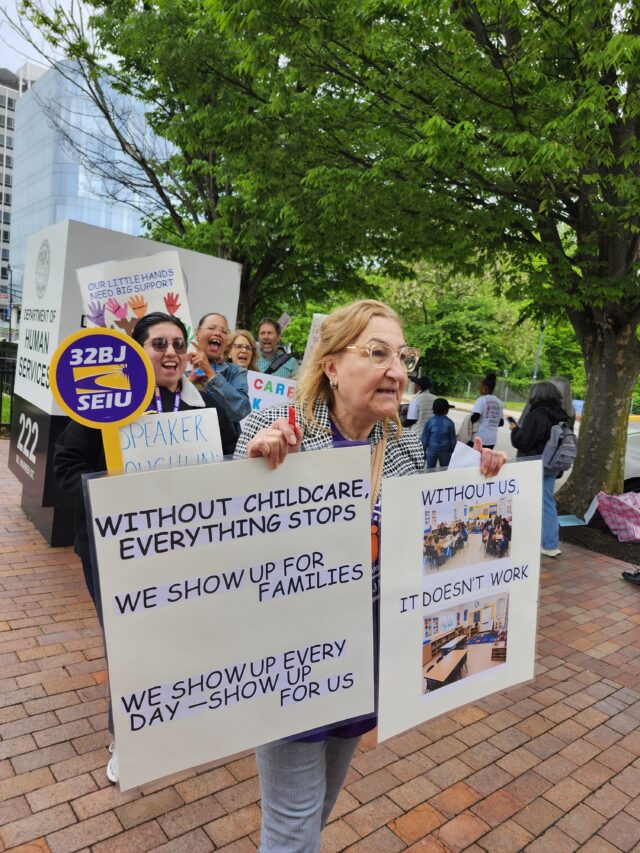
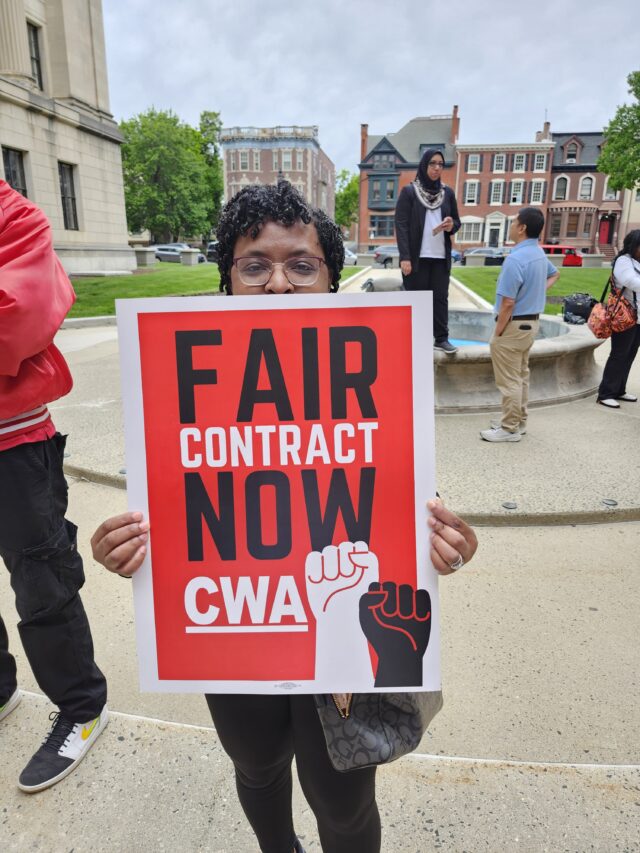
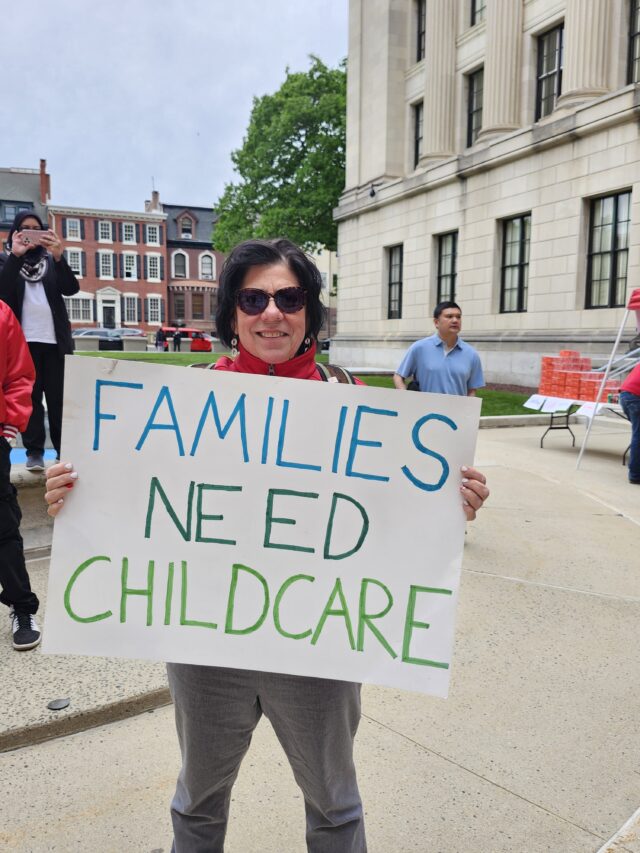
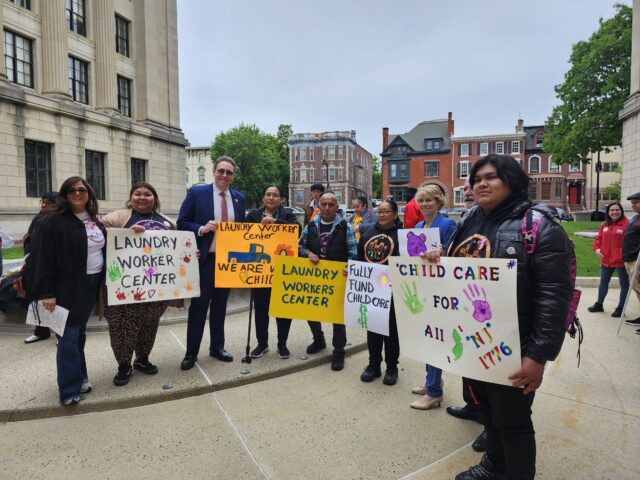
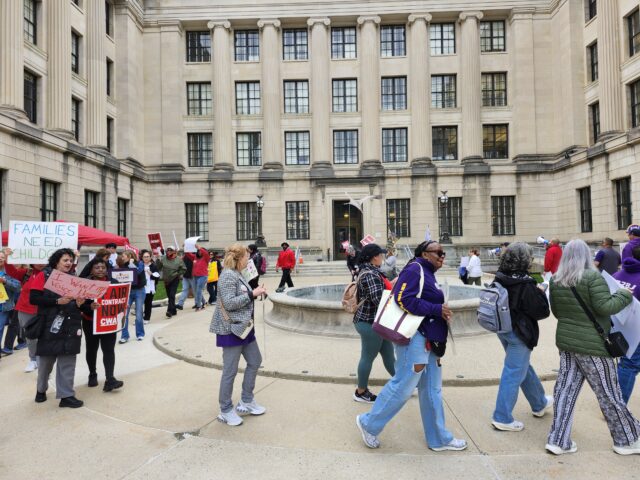
Local 1037 and NJCU were joined in the State House rally by New Jersey Citizen Action, Wind of the Spirit, SEIU Local 32BJ, Laundry Workers Center, New Labor, State Parent Advocacy Network, and other members of the Child Care For All Coalition. We held a rally outside the Statehouse Annex for an hour, where parents and childcare providers shared personal stories of how childcare inaccessibility has affected them.
Childcare supporters Assemblymembers Lisa Swain, Christopher Tully, Gary Schaer, and Senator Angela McKnight spoke at the rally before coalition members went to the Statehouse to speak with other lawmakers. The coalition’s legislative agenda demands that the state:
- Pay early educators living wages with benefits — health coverage and retirement security included
- Fully fund child care assistance program so working-class families can afford care
- Expand eligibility so no family gets left behind
- Make the wealthy pay their fair share — tax millionaires, billionaires, and New Jersey’s most profitable industries to fund affordable child care for all
Last year, the legislature froze Childcare Assistance Program (CCAP) applications and hiked copays to 6% of income, forcing thousands of working families—disproportionately Black and Brown mothers—off the rolls.